
Playing With the Blues….
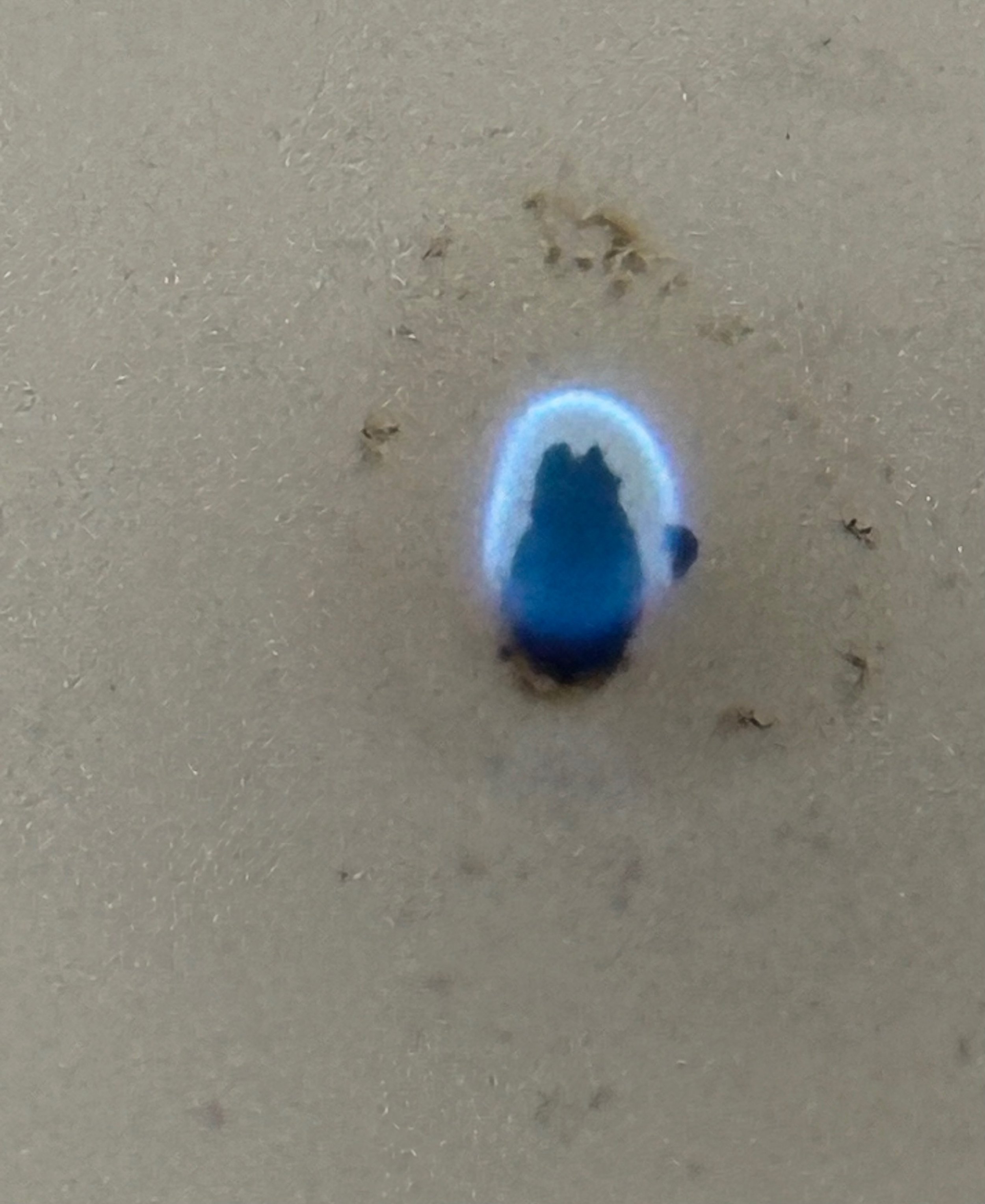
When my candle had the Blues.
There’s something I wish everybody knew about the Blues.
This “something” didn’t just change the way I experience music.
It transformed how I experience life.
I’m gonna start by saying a few words that have gotten me into trouble in the past.
Yes, these words have made people angry. Oh well. Here they are:
If you think the Blues is “sad music,” YOU DON’T HEAR IT YET.
There! I said it!
Don’t worry. You’re in good (or bad) company. I thought the Blues was sad for a LONG time too.
You and I, we made the same mistake: we thought that the meaning(s) in the Blues lived in the words. (Some famous musicologists have made their livings off of this same misunderstanding. Another oh well. Let’s give them an ‘E’ for Effort.)
We were wrong.
Unlike so many songs and so much songwriting, the meaning(s) in the blues are not in the words.
The meaning(s) are in the relationship that unfolds between 1) the people singing, playing, or and/or hearing the blues, and 2) the “sad” topics found in the words; the raw stuff of life.
The shit.
The meaning lives in the between; in the relational.
This isn’t a superficial relationality; this is not agreement-masquerading-as-connection.
Rather, this relational in-between, where the meanings in the Blues live, is an emergent, unexpected, autonomous capital-M Mystery with a life very much of its own.
Just as Ralph Ellison and Albert Murray taught us, the people involved in the ritual of a blues or jazz performance transform their relationship to the shit of life by virtue of the fact that they are playing with it.
It’s one thing to be engulfed by life’s difficulties, to ex-press that overwhelm in catharsis.
There’s nothing wrong with that. It can even be healing for some.
But….
That’s not what the Blues is doing.
The Blues isn’t about ex-press-ing. And it’s not about catharsis or purging.
Rather, the Blues is a gods-damned (which is to say human-saved) act of courage to play with the excruciating experiences of life.
The archetypes —those ancient patterns in life and psyche represented by the goddesses and gods and embodied by nature herself — bring some unbearable thing into our lives….
And we play with it.
This is not hubris. When we play the Blues, by hearing or performing, we aren’t transgressing the limits of the gods and goddesses. We aren’t trying to raise anything from the dead.
Rather, we are honoring the human; the relational.
This is the essence of the Blues, and of blue in alchemy, which James Hillman reminds us is “guardian and keeper of faith with the human condition.” (Alchemical Psychology, 99)
Yes, the Blues can see rebirth in suffering. That in itself is a miracle.
It just doesn’t happen to be in a hurry to get there, as if rebirth were a goal or outcome or checkbox to be achieved in a self-help program or on a syllabus; as if suffering were something to “get through.”
Instead, the Blues asks, “What if suffering — the prima materia of life — is something to play with?”
This kind of play doesn’t only-see rebirth in suffering. Rather, it also-sees that the living field between — the realm of relationality and soul — is where the new life will be.
In this sense, the Blues does not idealize or idolize or fetishize suffering as a marker of maturity.
But it does deal with it. Just not, maybe, in the way one might expect. (I mean, what kind of a crazy person plays with suffering, at least in part because they know new life will come?)
And that new life, though intwined with archetypal forces (those ancient gods and goddesses), is unmistakably human, indelibly personal.
(Which is not to say only-human. Who hasn’t seen a dog play? Or a cat? A hedgehog? A panda? A flower? A tree? A mountain? A cloud? This morning, I saw a cloud open her arms wide, and holding the crescent moon in her right hand, playfully praise earth above and sky below…)
To be grounded in life through this kind of play is one antidote to hubris; a way to “be impregnated by our dormant ‘greatness,’ with size that has nothing in common with the grandiosity of an inflated ego, but rather with gravitas: the fullness, the weightiness, the strength within, of one’s own substance.”
Imagine that: an experience of our own substance—our own greatness—without inflation.
Hubris seeks power-over the archetypal forces of life. But, when we play the Blues, we aren’t pretending to have power over.
We are playing with.
Playing with tragedy…
Playing with things that are, we are told, to be taken more seriously.
What could be older than playing with the shit of life? What could be older than the Blues?
What could be older than Mother Earth HerSelf? Than the Stars ThemSelves? Or the Mountains ThemSelves?
What could by older than humans sharing stories and songs that the land gifts us?
And what can be newer, more life-empowering, and freeing than the same old play (the Blues) with the same old shit (“Everyday I have the blues…”)?
There is something of recognition in and between these realms of mythos, cosmos, psyche, and the Blues.
It isn’t the presence of the archetypal forces in these realms that moves me, per se.
It’s how Gaia’s children insist on playing with whatever those forces bring, even as we partner with, relate to and receive support from those same forces.
No wonder Ouranos got so upset. Gaia’s children were never going to simply let things be, simply go along with.
We are too much like our Mother.
We transform through play.
And we play with….everything.
Even experiences so big that something ancient within needs to give voice, to make marks, to tell stories, to paint images, to dance movements, and, yes, to play the Blues.
Like I said, it isn’t that the Blues let us ex-press those experiences…
It’s that the Blues—an archetypal, mythopoetic language of sounds—requires the capacity and concomitant freedom to translate our experiences into sound-symbols so ancient, with roots so deep, they can hold every part of us.
Through play.
Which is why I love the Blues.
And why I love astrology too.